Wildfire Smoke Remote Workday Plan: AQI, Clean Room, Meetings, and Recovery
A practical 2026 remote-work plan for wildfire smoke days: AQI checks, clean-room setup, purifier use, HVAC filters, meeting triage, and recovery steps.
Updated June 3, 2026. Wildfire smoke, local health advisories, and employer safety rules change quickly. Use this as a remote-work continuity checklist, then follow your local emergency management, AirNow, public health, and workplace guidance.
A wildfire smoke day is not just a comfort problem for remote workers. It can change where you sit, how you ventilate, whether you run errands, how you handle video meetings, and when you should stop trying to be productive and follow health guidance. The expensive mistake is treating poor air like a normal workday with a different view out the window.
The better approach is a short, repeatable plan: check the Air Quality Index before the day starts, create one cleaner indoor work zone, reduce smoke entry, triage meetings, protect laptop and phone continuity, and reset the room only when outdoor conditions improve. This article is not medical advice, and it cannot tell you whether it is safe for you personally to work. It is a practical remote-work operating plan for the tasks you can control.
The 15-minute smoke-day start checklist
Use this checklist before you open Slack, email, or your first calendar invite.
| Minute | Action | Decision you are making |
|---|---|---|
| 0-3 | Check local AQI and wildfire smoke guidance from AirNow or your local agency | Is this a normal workday, reduced-exposure day, or emergency-response day? |
| 3-5 | Close windows and exterior doors; avoid unnecessary trips in and out | How do I limit smoke entry? |
| 5-8 | Move laptop, charger, headset, water, and medication you need to one cleaner room | Where will I work for the next block? |
| 8-11 | Start the portable air cleaner if you have one; verify HVAC/filter settings | What filtration is actually running? |
| 11-13 | Send a status note if air quality may affect calls, commuting, childcare, or errands | Who needs a heads-up before the schedule breaks? |
| 13-15 | Convert low-value meetings to async or audio-only if needed | What can wait until conditions improve? |
AirNow explains the AQI as a color-coded scale for daily air quality and health concern levels. For remote work, the key point is not memorizing every number; it is deciding what action you will take at each level before the day becomes chaotic.
Step 1: make AQI a workday input, not background noise

Start with the most local reliable source you can access. AirNow, local air districts, state environmental agencies, and public health departments may publish different levels of detail because monitors, forecasts, and smoke plumes vary by location. If your work affects clients or teammates in multiple time zones, check the air where you are, not just where the company is headquartered.
Build a simple AQI-to-work plan:
- Good or moderate: normal work, but keep an eye on forecasts if wildfire smoke is expected later.
- Unhealthy for sensitive groups: reduce outdoor errands, move calls away from windows if smoke is visible or odor is present, and prepare the cleaner room.
- Unhealthy or worse: prioritize indoor exposure reduction, use the cleaner room, avoid optional outdoor activity, and be ready to move meetings async.
- Emergency guidance or evacuation notice: stop treating this as a productivity problem. Follow official instructions and your household emergency plan.
Do not rely on smell alone. Smoke particles can remain a problem when visibility looks acceptable, and indoor odor can lag behind outdoor readings. AQI is one input, not a personal health diagnosis, but it is much better than guessing from the window.
Step 2: set up one cleaner room instead of trying to fix the whole house

The EPA recommends creating a clean room during wildfire smoke events: a room with fewer windows and doors, limited smoke entry, and a portable air cleaner if available. For remote work, choose the room that can support a few hours of focused work without constant door opening. A bedroom, interior office, or den often works better than a large open-plan living area.
A work-ready clean room needs five boring things:
- Power: laptop charger, phone charger, and power bank if outages are possible.
- Connectivity: Wi-Fi signal or Ethernet; if your router is far away, test before a critical call.
- Filtration: portable air cleaner sized for the room, or HVAC filtration where appropriate.
- Low traffic: keep pets, deliveries, and repeated door openings to a minimum.
- Communication: tell teammates you are working from a smoke-day setup and may choose audio over video.
If you use towels or temporary draft blockers at door gaps, keep fire safety and trip hazards in mind. Do not block required exits, vents that your system needs for safe operation, or anything your landlord, building manager, or HVAC professional has told you to leave clear.
Step 3: run filtration intentionally
Portable air cleaners are not magic boxes. The EPA guide to home air cleaners emphasizes matching the cleaner to the room and using it properly. In practice, that means checking the room size rating, letting the unit run continuously during the smoky period, and avoiding the common mistake of placing it behind furniture where airflow is restricted.
For a remote-work desk, place the cleaner where air can move freely, not directly under a pile of cables or behind a curtain. If the unit has an automatic mode, consider whether it responds quickly enough for smoke events; some people prefer a known manual setting during the work block. Keep receipts and manuals in your household file so you can find replacement filter sizes before smoke season starts.
If you use central HVAC, review your system manual and local guidance. Some systems can recirculate indoor air; others require outdoor air for proper operation or building requirements. Higher-efficiency filters may help only if the system can safely handle them. Do not force a restrictive filter into equipment that is not designed for it.
Step 4: handle filters, vents, and thermostats without breaking comfort
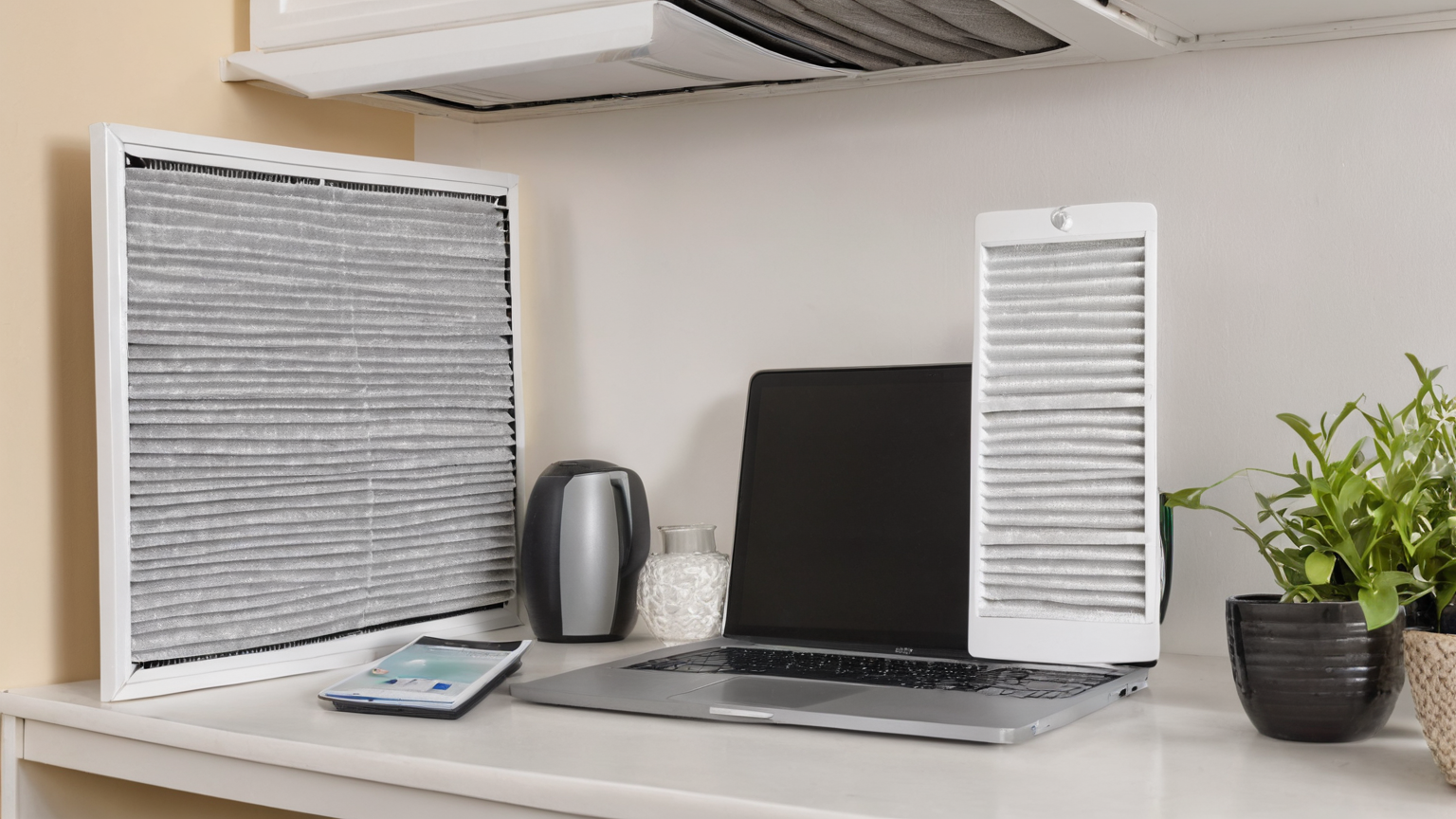
Smoke days often arrive with heat. That creates a tension: you want windows closed, but you also need a tolerable work environment. The Department of Energy’s thermostat guidance is about energy use, not wildfire health decisions, but it is still useful for planning. Pre-cool the space when outdoor air is acceptable, avoid wasteful temperature swings, and set a schedule that keeps your clean room usable during the work block.
Before smoke season, make a small HVAC note:
- filter size and replacement schedule;
- whether your thermostat has circulate, fan, or fresh-air settings;
- which settings your HVAC professional or building manager recommends during smoke;
- where spare filters are stored;
- who to contact if the system behaves oddly.
On the day itself, do not experiment randomly with every fan and vent in the house. Make one change, observe comfort and air movement, then document what worked. Your future self will not remember which setting helped during a stressful week.
Step 5: triage meetings like a continuity problem

Wildfire smoke may affect voice quality, energy, caregiving, school closures, outdoor commutes, and power reliability. Treat the calendar the way you would treat an internet outage: protect the meetings that create decisions, move low-value status updates to written notes, and avoid performative video when audio or async work is enough.
Use this triage order:
- Emergency and family needs first. If evacuation, local alerts, medical needs, or household safety are in play, work is secondary.
- Decision meetings next. Keep only the calls where your presence changes an outcome.
- Client commitments with clear updates. Give a calm, specific note if response time or video quality may change.
- Internal status meetings. Convert to written updates when possible.
- Deep work. Use the clean room for focused tasks that do not require constant talking.
A useful manager note is short:
Local wildfire smoke is affecting air quality today. I am working from a closed-room setup with filtration. I can join decision calls, but I may keep video off and move non-urgent updates async. I will post a status update by 2:00 if conditions or power change.
This message does not overshare health details. It explains operational impact, availability, and next update time.
Step 6: reduce indoor particle sources on smoke days
A clean room works better when you also avoid adding indoor particles. During smoke events, many public agencies recommend reducing activities that worsen indoor air. For a remote worker, the practical list is simple: avoid candles, incense, unnecessary frying, dusty cleaning, and projects that stir up particles. If you must cook, use appropriate ventilation when outdoor conditions and equipment allow, and keep the office door closed.
Also watch the little habits that break the plan: opening a window because a room feels stuffy, stepping outside repeatedly during breaks, running a whole-house fan that pulls outdoor air, or placing the purifier in a hallway while you work in another room. None of these mistakes are dramatic, but they make the clean zone less effective.
Step 7: keep an outage and evacuation layer ready
Wildfire smoke days can overlap with power shutoffs, internet outages, school closures, or evacuation warnings. Ready.gov’s wildfire guidance focuses on preparedness and official alerts; remote workers should translate that into a work continuity layer without confusing it for an emergency plan.
Keep these ready before the season:
- phone emergency alerts enabled;
- laptop and phone charged when smoke or fire weather is forecast;
- power bank and critical chargers in the clean room;
- employer emergency contact and absence process;
- backup internet plan from your existing internet outage workflow;
- battery plan from your remote-work power outage checklist;
- go-bag and household evacuation plan separate from work gear.
If official instructions conflict with your work plan, official instructions win. A missed meeting is recoverable; delayed evacuation may not be.
Step 8: recover the workspace only after outdoor air improves
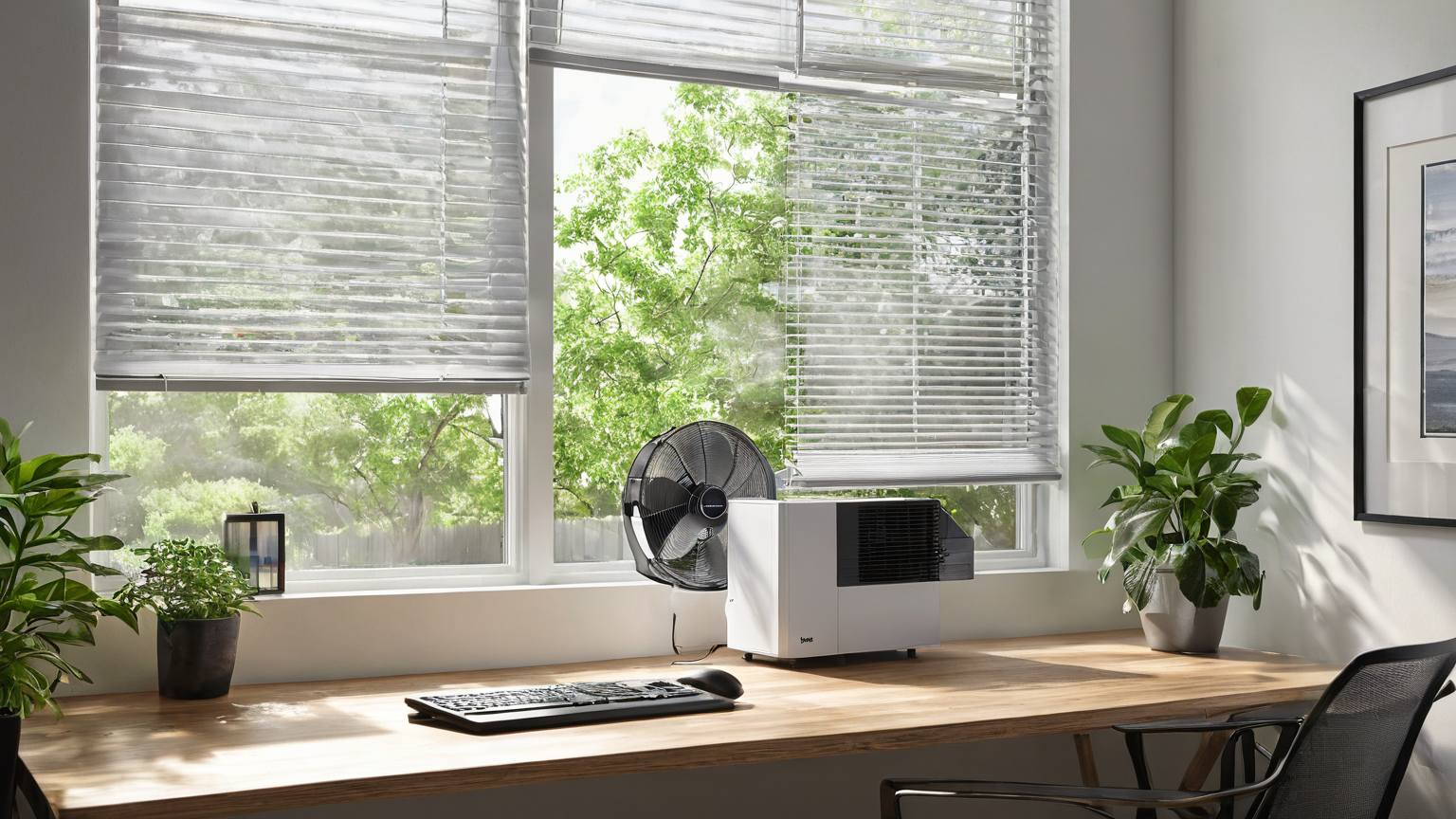
When smoke clears, do not instantly throw every window open because the room feels stale. Check current local guidance first. If outdoor air is acceptable, ventilate deliberately: open windows for a limited period, use fans safely, and keep the purifier running during and after the reset. Replace or check filters according to manufacturer instructions and the amount of use during the event.
Do a quick post-event review:
- Which room worked best?
- Did video calls remain usable?
- Was the purifier loud enough to require headset adjustments?
- Did lighting, glare, or closed curtains make work harder?
- Did you have enough water, chargers, and medication in the room?
- Which teammate or client message template should be saved?
If closed curtains and temporary room changes made video calls worse, borrow ideas from the home office lighting and glare setup. If purifier noise hurt calls, review your acoustic treatment and microphone chain. Smoke-day resilience is not a single purchase; it is a small operating system for the room.
A practical smoke-day kit for remote workers
Keep the kit modest and policy-safe:
- portable air cleaner and replacement filter plan;
- laptop charger, phone charger, and power bank;
- headset or microphone that works with purifier noise;
- water bottle and any personal health items you are expected to keep nearby;
- printed or offline copy of emergency contacts;
- short work status templates;
- tape or temporary draft-control supplies only where safe and allowed;
- N95 respirators or other protective equipment recommended by public health guidance for your situation.
Do not buy gadgets that encourage you to ignore public health advice. A purifier, AQI app, and better headset do not make outdoor smoke safe. They help you run the indoor workday more calmly when staying inside is the appropriate action.
AdSense and trust notes
This article is designed to be policy-safe and helpful: no affiliate recommendations, no medical diagnosis, no fear-based product claims, and no invented air-quality thresholds. It cites public agencies, separates emergency guidance from productivity advice, and links to related continuity articles so readers can solve the adjacent problems of power, internet, lighting, and call quality. The next improvement would be adding a printable one-page checklist and a region-specific source picker for readers outside the United States.
Bottom line
A wildfire smoke remote-work plan is a sequence, not a shopping list. Check AQI, protect one cleaner room, run filtration correctly, reduce indoor particle sources, triage meetings, and reset only when outdoor air improves. If the situation escalates to evacuation, medical concern, or official emergency instruction, stop optimizing the workday and follow safety guidance.